
① Oman and Iran have agreed to establish a joint working group to reach an agreement on the future navigation management of the Strait of Hormuz, ensuring navigational safety in the strait.
② The two sides will consult with other coastal states and stakeholders in the Persian Gulf on strait-related issues, emphasizing that all arrangements must respect the sovereignty of both countries.
③ Although Iran again closed the strait due to Israel’s attacks on Lebanon, at least 172 vessels have transited following the signing of the U.S.-Iran memorandum of understanding.
June 24 — According to a joint statement released on Tuesday, Oman and Iran have agreed to establish a joint working group to reach an agreement on the future navigation management of the Strait of Hormuz.
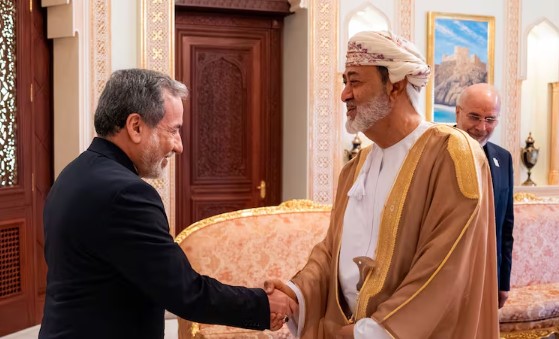
Oman’s Head of State Haitham and Foreign Minister Badr Al Busaidi held talks on Tuesday in Muscat, the Omani capital, with Iranian Parliament Speaker Mohammad Bagher Ghalibaf and Foreign Minister Abbas Araghchi.
The joint statement said that Oman and Iran, as two coastal states adjacent to the Strait of Hormuz, will work to ensure the “safety of navigation” in the strait in accordance with relevant provisions of international law. The two sides agreed to continue dialogue on this matter through a joint working group of their foreign ministries, with the aim of reaching an agreement on the future navigation management, maritime services and related costs of the Strait of Hormuz in accordance with international standards.
Oman and Iran described their cooperation as “strengthening maritime security, freedom of navigation and regional stability,” and said they will consult with other coastal states in the Persian Gulf and stakeholders on strait-related issues.
In addition, the statement emphasized that “all arrangements related to the strait must fully respect the sovereignty and sovereign rights of both countries.”
Previously, in May, the United States warned Oman not to become involved, directly or indirectly, in any action to impose tolls in the Strait of Hormuz, and said it would punish any Iranian partners participating in such actions.
U.S. Treasury Secretary Bessent recently told the media that he had spoken with Oman’s ambassador to the United States, who assured him that Oman “will not charge fees for navigation through the Strait of Hormuz.”
It is well known that the Strait of Hormuz is critical to energy exports from the Arabian Gulf. Before the outbreak of the U.S.-Iran conflict on February 28, more than 20% of the world’s liquefied natural gas and oil was transported through this waterway every day.
The U.S.-Iran memorandum of understanding signed last week allows Iran to temporarily manage the strait. After the memorandum was reached, Tehran agreed to reopen the strait and not charge “transit fees” to passing vessels for 60 days.
However, last weekend, Iran announced the closure of the strait again in response to Israel’s attacks on Lebanon, and Washington quickly raised objections.
After new disputes emerged over the peace agreement, an Iranian military source told media on Tuesday that only a limited number of vessels are currently allowed to pass through the strait each day.
Nevertheless, ship tracking data shows that at least 172 vessels have transited the Strait of Hormuz since the U.S.-Iran memorandum of understanding was signed, although this remains far below pre-conflict levels. A large number of Iranian mines still remain in the strait’s waters. The Joint Maritime Information Center (JMIC), comprising multinational maritime organizations including the United States, has warned vessels to avoid the central part of the strait and to use the southbound route near the Omani coast, stating that this route has been confirmed to be mine-free. On another front, Trump recently proposed a “Guardian Angel fee,” saying that if a final agreement with Iran is not reached within 60 days, a transit fee will be imposed on the Strait of Hormuz. He stated that the money would be used to fund U.S. services as a “guardian angel” for Middle Eastern countries.
